

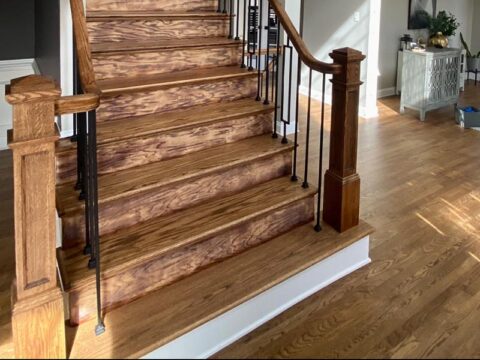
When planning a staircase upgrade, there are often multiple factors influencing your decision: safety concerns, visible wear, changing design preferences, or broader renovation goals. What is not always obvious, however, is which path makes the most sense. Many homeowners reach a point where it becomes difficult to determine whether their staircase needs a simple repair, a full replacement, or a more comprehensive redesign.
If you find yourself weighing these options, Darby Stair Renovations is here to provide clarity. As a top-rated staircase contractor in Maryland, we have developed extensive expertise in evaluating staircases and identifying the signs that indicate when improvements are necessary.
In this guide, you’ll learn how to assess the condition and performance of your staircase and determine the most appropriate renovation approach. We’ll walk through the key indicators for repair, replacement, and redesign, along with practical considerations that influence cost, safety, and long-term value.
When Staircase Repair Is the Right Solution
Staircase repair is often the most efficient option when your staircase is structurally sound but showing signs of surface-level wear. In these instances, repairs focus on addressing localized issues caused by daily use, environmental exposure, or natural aging without altering the staircase’s overall structure or design.
You may notice cosmetic or comfort-related issues that affect appearance but not performance. These problems can often be resolved through refinishing, reinforcing, or selective component replacement.
Signs Your Staircase Is a Good Candidate for Repair
If your staircase meets current code requirements and the underlying structure remains intact, repair may be the most practical solution if any of these common indicators are present:
- Worn, scratched, or faded stair treads
- Minor squeaking or creaking during use
- Loose balusters or handrails
- Small cracks in finishes or nosings
- Solid stringers with no sagging or movement
Repair is particularly effective when your staircase was originally built with high-quality materials. Solid hardwood stair systems, for example, often respond exceptionally well to refinishing, allowing you to extend their lifespan without sacrificing craftsmanship.
If you plan to remain in your home long-term, repairs offer a cost-effective way to refresh your staircase while maintaining continuity with existing flooring.
Clear Signs That Staircase Replacement Is Necessary
There are situations where repair is no longer sufficient, and full staircase replacement becomes the safest and most responsible choice. Replacement addresses foundational problems that compromise performance, safety, or compliance and cannot be resolved through surface-level improvements.
Structural instability is one of the clearest indicators. Over time, materials can weaken due to moisture, improper construction, or long-term wear. When these issues affect core components, replacement provides a clean, reliable solution.
Warning Signs That Indicate Full Staircase Replacement
You should strongly consider replacement if your staircase shows any of the following:
- Uneven or inconsistent riser heights
- Sagging, cracked, or undersized stringers
- Excessive movement or flex underfoot
- Visible rot, moisture damage, or splitting
- Failure to meet modern building code standards
Building code compliance is another major factor. Many older staircases were constructed under outdated standards and may not meet current requirements for tread depth, riser height, handrail placement, or baluster spacing. If you are renovating, preparing to sell, or undergoing inspection, non-compliant staircases must often be replaced to move forward.
When a Staircase Redesign Creates the Most Value
A staircase redesign is ideal when your existing staircase functions adequately but no longer aligns with your layout, style, or performance expectations. Rather than correcting damage, redesign allows you to transform the staircase into a purposeful architectural feature that enhances your entire interior.
As open-concept designs and premium flooring become more common, staircases are increasingly visible.
Common Reasons Homeowners Choose to Redesign
You may benefit from a staircase redesign if your goals include:
- Opening enclosed stairwells for better sightlines
- Transitioning from carpeted stairs to hardwood
- Updating railing or baluster styles
- Improving lighting and visibility
- Creating a focal design element
Redesign also provides opportunities to enhance functionality. Widening the staircase, improving ergonomics, and reconfiguring landings can increase comfort and safety. In multi-level homes, a redesigned staircase improves circulation and strengthens the connection between floors.
Because redesign often involves both structural and aesthetic changes, careful planning is essential. You must consider feasibility, code requirements, and material compatibility. Coordination with flooring installation is especially important, as finished floor heights directly impact stair dimensions.
The Importance of Material Selection in Staircase Projects
Material selection is a big part of how your staircase performs, ages, and integrates with the surrounding flooring. Choosing the right materials ensures durability under daily use while supporting your overall design vision.
Hardwood remains a preferred choice for premium staircases due to its strength, longevity, and timeless appeal. Species selection matters as well, with harder woods resisting wear more effectively in high-traffic areas. Engineered wood is also a strong option, offering increased dimensional stability in environments with humidity fluctuations.
Key Factors to Consider When Choosing Stair Materials
When evaluating materials, consider the following:
- Durability under consistent foot traffic
- Resistance to moisture and environmental changes
- Slip resistance and finish texture
- Visual compatibility with flooring
- Long-term maintenance requirements
Railings and balusters require equal attention. These components must provide structural support while aligning with your design goals. Traditional profiles suit classic interiors, while clean, minimalist designs complement modern spaces. Finish selection is critical, as overly glossy surfaces may increase slip risk on stair treads.
Building Codes, Safety Standards, and Compliance
Staircases are among the most heavily regulated elements in residential and commercial construction, largely because they play such a critical role in daily safety. Whether you are repairing, replacing, or redesigning your staircase, compliance with current building codes is not optional.
These codes establish clear standards for tread depth, riser height, handrail placement, railing height, and baluster spacing. When any of these elements fall outside acceptable tolerances, the risk of trips and falls increases significantly. Even seemingly minor inconsistencies, such as uneven riser heights, can disrupt natural movement patterns.
Many older staircases no longer meet modern code standards, even if they are still functional. During renovation projects, these shortcomings often become impossible to ignore, particularly when inspections are involved. Overlooking code requirements at this stage can result in failed inspections, construction delays, or ongoing liability concerns that extend well beyond project completion.
In addition to dimensional requirements, lighting plays a critical role in staircase safety. Adequate illumination improves visibility, reduces accident risk, and enhances usability. By integrating lighting upgrades during a staircase renovation, you not only improve safety compliance but also elevate the overall design.
Ultimately, the most reliable way to ensure compliance and avoid costly mistakes is to work with an experienced staircase contractor who understands local building codes and safety standards. Proper planning and execution from the start reduce the risk of failed inspections, unnecessary rework, and wasted investment, ensuring your staircase upgrade stays on track and within budget.
Cost Considerations and Project Timelines
Understanding cost and timeline expectations allows you to approach your staircase renovation with clarity and confidence.
While every project is unique, these general comparisons help set baseline expectations:
- Repair: Lowest overall cost, shortest timeline, minimal disruption to your home
- Replacement: Moderate to higher investment, longer timeline, full structural renewal
- Redesign: Highest investment level, extended planning and coordination, greatest visual and functional impact
Although cost and timeline should not be the sole drivers of your decision, they are essential considerations when evaluating the most practical path forward.
It is also wise to allocate a contingency fund in addition to your primary budget. Staircases often conceal structural components that are not fully visible until work begins. For example, a project that initially appears to require only surface-level repairs may reveal underlying structural concerns once materials are removed.
Having financial flexibility allows you to address these issues properly without delaying the project or compromising long-term safety and performance.
Choosing the Right Staircase Renovation Path With Darby Stair Renovations
A successful staircase renovation is ultimately about making informed decisions that balance safety, performance, and design. Whether your project involves restoring an existing staircase, building a new one, or reimagining it entirely, the right approach is the one that supports how your space functions today while accounting for the future.
Our focus at Darby Stair Renovations has always been to serve homeowners and builders with expertise in premium custom stair components, offering solutions that are built with precision and long-term performance in mind.
If you’re planning a staircase renovation, reach out to us today, and we’ll help you determine the staircase improvements that will provide you the greatest return on your investment.