

When Should You Replace Your Staircase? Signs Maryland Homeowners Shouldn’t Ignore

Staircase with carpeted steps and new wood and metal railings by Darby Star Renovations.

You may not notice staircase damage right away, especially when it develops gradually. A loose tread, unstable railing, recurring squeak, or small area of water damage can seem minor at first. Over time, however, these issues can affect the safety, appearance, and everyday function of your stairs.

Knowing what to look for can help you decide whether a repair will solve the problem or whether replacing your staircase is the better long-term choice. Below, you’ll learn the most common warning signs that your stairs may need more than a quick fix.

Your Staircase Feels Loose, Uneven, or Unstable

If a tread shifts, a step dips under your weight, or your stairway moves as you climb, you shouldn’t ignore the problem. Movement can indicate loose fasteners, damaged supports, worn materials, or weakened connections beneath the finished surface.

Pay attention to the entire staircase rather than focusing on one flexible step. You may notice that one side moves more than the other, the center feels springy, or several treads seem uneven. These conditions can create a tripping hazard because your body expects every step to have a consistent height and depth.

A single loose tread may be repairable if the supporting structure remains strong. However, several moving steps can point to damage in the stringers, risers, framing, or attachment points. If earlier repairs haven’t lasted, repeated patching may only delay a larger renovation.

Consider Who Uses the Stairs

You should also think about everyone who depends on the staircase. Children, older adults, guests, and people with limited mobility are more likely to lose their balance on uneven or unstable steps.

When movement affects several parts of the staircase, a complete renovation may provide a safer and more dependable result than a series of isolated repairs.

You Notice Cracks, Rot, or Water Damage

Visible deterioration is one of the clearest signs that you may need to replace your staircase. Cracked treads, split risers, soft wood, dark stains, warped boards, and crumbling edges can all indicate damage that extends below the surface.

Moisture is a common cause of staircase problems in Maryland homes. Plumbing leaks, damp basements, poorly sealed entryways, and seasonal humidity can cause wood to expand, contract, twist, or decay. Over time, repeated moisture exposure may weaken visible stair parts and the hidden structure supporting them.

Warning signs that moisture damage may be serious include:

  •     Wood that feels soft, spongy, or brittle
  •     Dark stains that continue to spread
  •     Warped treads or risers
  •     A musty smell near the staircase
  •     Paint or finish that repeatedly bubbles or peels

You should inspect suspicious areas carefully, but don’t assume that the visible damage shows the full extent of the problem. Painted wood can conceal decay, while carpeting may hide cracks, loose boards, and deteriorated tread edges.

If damage is limited to one accessible area, a targeted repair may work. When rot, warping, or cracking appears across several steps or reaches the stringers, full staircase replacement is often the safer choice.

Your Railings, Balusters, or Newel Posts Are Loose

Handrails and guardrails are essential safety features. They help you maintain balance, support your weight, and reduce the risk of a fall. When a handrail wobbles, a newel post shifts, or balusters feel loose, your staircase may no longer provide the support you expect.

Test the railing system at several points only if you can do so safely. Apply gentle pressure to the handrail and check for movement where it connects to walls, posts, floors, and landings. Look for cracks, gaps, exposed fasteners, damaged brackets, or balusters that no longer sit firmly in place.

You should also consider whether the railing is comfortable to use. An oversized, awkward, or poorly positioned handrail can be difficult to grip, especially for children or older adults. Wide gaps between balusters may also create concerns in homes with young children or pets.

Minor movement may be corrected by tightening or replacing individual stair parts. Older railing systems, however, often have several problems at once. Replacing the complete system can improve safety, appearance, and structural consistency.

Your Stairs Squeak Constantly

An occasional squeak doesn’t always mean you need a new staircase. Wood naturally expands and contracts as temperature and humidity change. Minor noise can also develop where treads rub against risers or fasteners loosen slightly.

Constant squeaking throughout the staircase deserves more attention. Widespread noise may signal that multiple joints are moving, treads are separating from risers, fasteners are failing, or structural supports have weakened.

Listen for patterns as you use the stairs. A sound coming from one tread may indicate a localized issue. Noise across several steps, especially when paired with movement, usually suggests a broader problem. You may also notice gaps between treads and risers, cracked trim, raised nail heads, or boards that flex under pressure.

Access Can Affect the Repair

The underside of the staircase can determine how easily the source of the noise is corrected. Some stairs can be reinforced from an unfinished basement or storage space. Others are enclosed behind finished walls and ceilings, making repeated repairs more disruptive.

If squeaking continues after earlier work, the stair structure may be shifting in a way that surface fixes can’t resolve. Replacing worn components or rebuilding the staircase can reduce noise, improve stability, and address the actual cause of the movement.

The Stair Layout Feels Unsafe or Difficult to Use

Sometimes your staircase needs replacement because of its design rather than its condition. Narrow treads, tall risers, steep angles, tight turns, low headroom, and poorly placed landings can make the stairs uncomfortable or unsafe, even when the materials appear intact.

These layout problems are common in older Maryland homes, basement conversions, attic renovations, and additions where limited space influenced the original design. You may find yourself turning your feet sideways on narrow steps, ducking beneath a ceiling, or struggling to carry furniture and laundry between floors.

Pay attention to how the staircase connects with nearby rooms. A bottom step that ends too close to a doorway can create congestion. A tight landing may make it difficult to change direction safely. Poor lighting can make steep or irregular stairs even harder to navigate.

You should also consider your future needs. A staircase that feels manageable now may become challenging as you age or if a family member develops mobility limitations.

Small adjustments can improve lighting, traction, or handrail placement. Correcting tread depth, riser height, pitch, direction, or landing size usually requires more extensive reconstruction. When the layout creates daily frustration or safety concerns, replacing the staircase can improve movement through your home and make the entire space more functional.

Your Staircase No Longer Matches Your Home

A staircase can remain structurally usable while making your interior feel dated. Worn carpeting, heavy railings, damaged trim, builder-grade balusters, mismatched wood tones, and oversized newel posts can draw attention for the wrong reasons.

Because staircases are often located near an entryway or central living area, they have a major visual impact. An outdated staircase can make nearby flooring, paint, and furnishings feel less cohesive, even after you update the rest of the room.

You should evaluate the staircase as part of the complete interior. Consider how the treads, risers, handrails, balusters, and posts relate to your floors, wall colors, trim, lighting, and architectural style. A modern railing system may look out of place in a traditional home unless the materials and proportions are carefully selected.

Cosmetic Updates Versus Replacement

Cosmetic improvements may be enough when the structure is stable. Refinishing wood treads, painting risers, replacing balusters, or installing a new handrail can dramatically refresh the space.

Full replacement may be more practical when several parts are worn, damaged, poorly proportioned, or difficult to coordinate. A custom staircase renovation can create a consistent design that suits the rest of your home while improving comfort, durability, and long-term maintenance.

Repairs Keep Becoming More Frequent

Repeated staircase repairs can signal that the existing system is reaching the end of its useful life. Tightening one tread, replacing a baluster, patching cracked trim, and fixing recurring squeaks may seem affordable when each problem appears separately. Over time, the costs and disruptions can add up.

Keep a record of what has been repaired and how long each fix lasts. If the same steps continue to loosen or the same cracks keep returning, the underlying structure may be causing the problem. You may also notice that replacement parts don’t match the original wood, finish, or design.

Ask yourself these questions before paying for another repair:

  • Has the same problem returned more than once?
  • Are several stair parts failing at the same time?
  • Will the repair correct the cause or only the symptom?
  • Are mismatched replacement parts affecting the appearance?
  • Would a full renovation reduce future maintenance?

The most important consideration is whether each repair is restoring the staircase or simply delaying the next issue. When several components are worn, replacing them together can create a stronger and more consistent result.

You shouldn’t base the decision only on the cost of the next repair. Compare that expense with the long-term value of a staircase renovation that improves safety, reduces maintenance, and fits the rest of your home.

Your Staircase Has Outdated or Damaged Stair Parts

Every staircase depends on multiple components working together. Treads support your feet, risers close the vertical space between steps, stringers carry the load, and railings provide balance and fall protection. When several stair parts begin to fail, the entire system can become less reliable.

You may notice worn tread edges, cracked risers, loose trim, damaged brackets, split balusters, or newel posts that no longer sit securely. One damaged component may be easy to replace, but widespread wear can indicate that the staircase has deteriorated as a whole.

The age of the parts also matters. Older stair components may have been modified several times, painted repeatedly, or repaired with mismatched materials. These changes can make new repairs more difficult and may prevent replacement pieces from fitting correctly.

Look Beyond Surface Damage

You shouldn’t assume that visible damage is the only problem. A cracked tread may result from insufficient support underneath it. A loose post may be caused by a weakened mounting point rather than the post itself.

When several parts need replacement, a coordinated staircase renovation can be more effective than choosing components one at a time. It allows the materials, finishes, dimensions, and connections to work together, creating a safer staircase and a cleaner final appearance.

You’re Planning a Larger Home Renovation

A broader remodeling project can be the ideal time to replace your staircase. New flooring, wall changes, entryway updates, basement finishing, or an open-concept renovation may expose design and structural issues that were previously hidden.

Your existing staircase may no longer fit the updated space. Old wood tones might clash with new floors, bulky railings may block natural light, or the stair direction may limit how you use the surrounding rooms.

Planning the staircase alongside the rest of the renovation can create a more cohesive result. You can coordinate tread materials with flooring, select railing details that complement nearby trim, and improve transitions between levels.

Important features to coordinate include:

You may also avoid disturbing newly finished surfaces later. Replacing a staircase after new floors, paint, and walls are complete can require extra protection, patching, and refinishing.

Even when replacement isn’t urgently required, including the staircase in your renovation plan can help you avoid an interior that feels only partially updated. A well-designed staircase can connect the old and new elements of your home while becoming a focal point that feels intentional.

Choose the Right Staircase Solution for Your Maryland Home

Loose steps, unstable railings, recurring noises, water damage, and an impractical layout are more than minor inconveniences. They can affect how safely and comfortably you use your staircase while also taking away from your home’s overall appearance.

Depending on the condition of your stairs, you may only need targeted repairs or updated components. In other cases, a more extensive renovation or full replacement may provide better long-term value. A professional assessment can help you understand the extent of the damage and choose the right solution for your home.

Darby Stair Renovations helps Maryland homeowners repair, update, and transform worn or unsafe staircases. Contact us to schedule a consultation and start planning a staircase that is safer, stronger, and better suited to your home.

How Humidity Affects Wood Stairs in Maryland Homes and How to Protect Yours

Custom staircase with dark wood finish by Darby Stair Renovations.

Maryland’s changing seasons don’t just affect the weather outside. They also influence the condition of the wood throughout your home, especially your staircase. If you’ve noticed squeaky steps, widening gaps, warped treads, or loose railings, fluctuating humidity levels may be the cause. 

Below, we explore how humidity impacts wood staircases and what you can do about it. With the right preventive care, you can extend the life of your staircase and keep it looking its best through every season.

Why Maryland’s Climate Creates Challenges for Wood Stairs

Wood naturally absorbs and releases moisture from the surrounding air, causing it to expand when humidity rises and contract when conditions become dry. Because Maryland experiences humid summers, chilly winters, and frequent seasonal changes, your staircase constantly adjusts to its environment.

While this movement is normal, years of expansion and contraction place stress on stair treads, risers, handrails, balusters, and fasteners. Daily foot traffic only increases that stress, making staircases one of the first places where homeowners notice the effects of changing humidity.

Several factors influence how much your staircase moves throughout the year:

  • Hardwood species
  • Indoor humidity levels
  • Installation quality
  • Age of the staircase

Durable hardwoods like oak and maple perform well in Maryland homes, but they still react to moisture just like any other natural wood product. Understanding these factors helps you recognize when seasonal movement is expected and when it signals a larger problem.

Common Signs Humidity Is Affecting Your Staircase

Humidity-related problems present in several classic ways. Paying attention to these subtle changes allows you to address problems before they become more expensive or compromise safety.

Squeaks and Gaps

One of the earliest signs is a staircase that begins squeaking or creaking. As wood shrinks during Maryland’s drier months, small gaps can develop between stair components. Those tiny shifts create movement whenever someone walks on the stairs.

You may also notice gaps between stair treads and risers. Small seasonal gaps aren’t unusual, but larger openings or gaps that remain throughout the year may indicate excessive movement or aging construction.

Warping and Loose Components

High humidity presents a different challenge. When wood absorbs excess moisture, stair treads can begin to cup, twist, or warp. Handrails, balusters, and newel posts may also become loose as joints experience repeated expansion and contraction.

Even slight movement in these components can reduce stability and affect the overall appearance of your staircase. Addressing these issues early helps prevent additional wear while maintaining a safer staircase for everyone in your home.

Finish Damage

Your staircase’s finish provides important protection against moisture, but it doesn’t last forever. Peeling, bubbling, cracking, or worn finishes allow humidity to penetrate the wood more easily.

Regularly inspecting your staircase helps you spot finish damage before moisture reaches the wood beneath. Keeping that protective barrier in good condition extends the life of both the finish and the staircase itself.

How Indoor Humidity Influences Wood Stairs Year-Round

Although Maryland’s outdoor climate starts the process, the conditions inside your home have an even greater impact on your staircase. Heating systems, air conditioning, ventilation, and everyday activities all influence indoor humidity levels, directly affecting how your wood stairs perform throughout the year.

During winter, forced-air heating removes moisture from the air. As humidity drops, wood naturally shrinks. This often explains why squeaky stairs become more noticeable during colder months. Small gaps form as the wood contracts, allowing components to shift slightly under pressure.

Summer creates the opposite situation. Warm air holds more moisture, and everyday activities like cooking, showering, and doing laundry add even more humidity indoors. Without proper climate control, wood absorbs excess moisture and expands. Over time, repeated cycles of expansion and contraction place unnecessary stress on the staircase.

Practical Ways to Protect Your Wood Stairs

Protecting your staircase from humidity doesn’t require complicated maintenance. A few consistent habits can significantly reduce seasonal wood movement, preserve your staircase’s finish, and help you avoid unnecessary repairs. The key is creating a stable indoor environment while addressing small issues before they become larger problems.

Maintain Consistent Indoor Conditions

One of the best ways to protect wood stairs is by keeping your home’s humidity as consistent as possible throughout the year. Sudden swings between very dry and very humid conditions place unnecessary stress on hardwood. If your home regularly falls outside the ideal humidity range of 35-55%, consider using a whole-home humidifier, portable humidifier, or dehumidifier to help regulate moisture levels.

Routine HVAC maintenance also supports healthier indoor conditions. Replacing filters, scheduling seasonal inspections, and ensuring proper airflow all contribute to more consistent humidity throughout your home.

Protect the Wood Surface

Proper cleaning plays an equally important role. Use cleaning products designed specifically for hardwood surfaces, and avoid leaving excess water on your stairs. A microfiber cloth that is only slightly damp is usually all that’s needed for routine cleaning.

Inspect your staircase periodically for scratches, worn finishes, or signs of moisture damage. Refinishing the wood before the protective coating wears away helps slow moisture absorption and extends the life of the staircase. It’s also smart to wipe up spills promptly and avoid leaving wet shoes, umbrellas, or damp floor mats on hardwood stairs for extended periods.

Consistent maintenance takes far less time and money than repairing moisture-related damage after it develops.

When Repairs Are No Longer Enough

Many humidity-related problems can be corrected with minor repairs, especially when they’re addressed early. However, there comes a point when repairing individual components no longer provides the best long-term solution. Knowing when to invest in a staircase renovation helps you protect both your home and your budget.

Signs a Renovation May Be the Better Option

Recurring squeaks, loose handrails, warped treads, damaged balusters, and extensive cosmetic wear often indicate that years of seasonal movement have affected multiple parts of the staircase. Repairing one section may temporarily solve the problem, but underlying issues can continue to surface elsewhere.

Older staircases may also have outdated construction methods or materials that no longer meet expectations for safety, durability, or appearance. Renovating the staircase as a complete system allows every component to work together while improving long-term performance.

The Value of Professional Craftsmanship

A professionally renovated staircase does more than eliminate existing problems. It also provides an opportunity to update your home’s style with custom stair parts, modern moulding and trim, and premium hardwood materials selected for lasting durability.

Properly acclimated wood, precision installation, and high-quality finishes all help minimize future movement caused by Maryland’s changing humidity. Investing in expert craftsmanship creates a staircase that performs better, looks beautiful, and adds lasting value to your home.

Trust Darby Stair Renovations to Protect Your Investment

Humidity is a natural part of living in Maryland, but it doesn’t have to shorten the life of your staircase. By understanding how wood responds to seasonal moisture, maintaining consistent indoor humidity, and addressing small issues early, you can keep your stairs safe, beautiful, and structurally sound for years to come.

When your staircase needs more than routine maintenance, we’re here to help. Darby Stair Renovations specializes in staircase renovations, custom railings, and quality moulding and trim, all designed for Maryland homes. Whether you’re updating an aging staircase or planning a complete transformation, our team delivers exceptional craftsmanship.

Contact Darby Stair Renovations today to schedule your consultation and get the most out of your staircase renovation.

Custom vs. Standard Stair Parts: Achieve a Better Fit and Finish

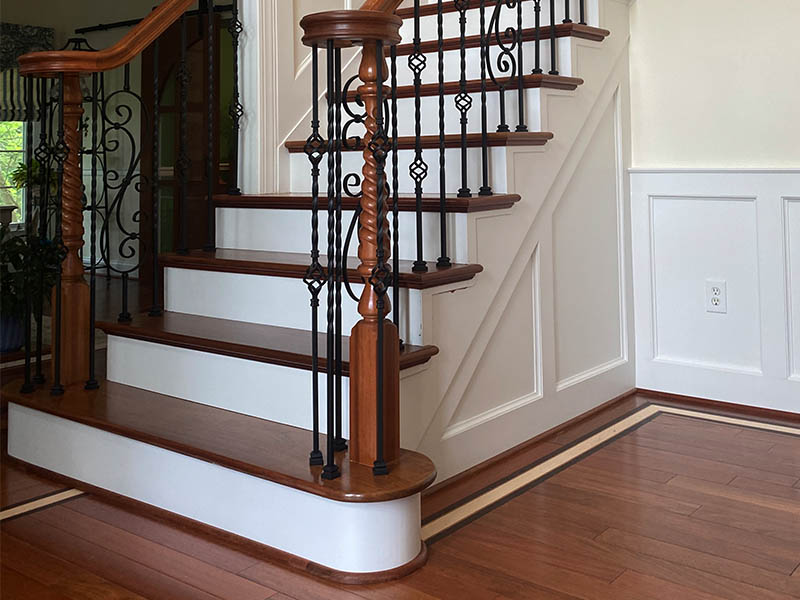
New stair renovation completed by Darby Stair Renovations featuring finished wood treads, painted white risers, and decorative wrought iron railings.

Not all stair renovations deliver the same level of quality, even when the materials look similar at first glance. In many Maryland homes, the difference comes down to whether your staircase uses standard stair parts or components tailored specifically to your space. That distinction becomes especially noticeable in homes with visible entry staircases, detailed trim work, or older architectural features that stock materials weren’t designed to match.

Your staircase should feel connected to the rest of your home, not like a separate project installed around it. The proportions of the railings, the alignment of transitions, and the way each component fits together all influence how polished the final result looks. If you’re planning a stair remodel in Maryland, the choice between custom and standard stair parts can directly affect the appearance, durability, and long-term value of your renovation.

What Are Standard Stair Parts?

Standard stair parts are pre-manufactured staircase components built in common sizes and profiles. These parts are designed to fit a wide range of residential staircases and are widely available through stair manufacturers, lumber suppliers, and home improvement retailers.

Common standard stair parts include:

  • Stair balusters
  • Handrails
  • Newel posts
  • Stair treads
  • Fittings and trim pieces

Because standard stair parts are mass-produced, they’re usually more affordable and easier to source than custom components. If your staircase follows conventional dimensions and your renovation goals are relatively simple, standard stair parts can provide a practical and cost-effective solution.

Many Maryland homeowners use standard components when replacing carpeted stairs with hardwood treads, upgrading wood balusters to iron balusters, or modernizing an outdated railing system. In newer homes throughout Howard County, Montgomery County, and surrounding areas, stock stair parts often fit reasonably well with the original staircase structure.

Still, standard stair parts are built for broad compatibility rather than your exact staircase. In older Maryland homes, especially historic properties near Annapolis and Baltimore, stock components may not align properly with existing trim, stair angles, or architectural details.

What Are Custom Stair Parts?

Custom stair parts are designed or fabricated specifically for your staircase. Instead of relying entirely on stock dimensions and profiles, custom components are tailored to match the exact measurements, proportions, and design style of your home.

Custom fabrication can include specialty handrail profiles, custom-sized newel posts, decorative trim details, unique tread dimensions, and wood species selected to coordinate with your existing flooring or millwork.

Why Custom Stair Parts Matter in Maryland Homes

Homes throughout Maryland vary widely in architectural style. Colonial homes in Annapolis, historic rowhomes near Baltimore, and custom-built homes throughout central Maryland often contain details that standard stair parts can’t replicate effectively.

Older homes may have settled floors, irregular stair angles, or unique trim profiles that make stock components difficult to install cleanly. In these situations, custom stair parts help preserve the character of your home while creating a staircase that feels cohesive and professionally finished.

Custom fabrication also becomes more valuable when your staircase serves as a focal point within your home. Open-concept layouts and entryway staircases naturally draw attention, making inconsistencies in fit or proportion easier to notice.

Why Stair Part Fit Matters

Fit is one of the biggest differences between custom and standard stair parts. Even high-quality stock components are manufactured to fit many staircase layouts, which means they aren’t always ideal for your specific space.

Poorly fitted stair parts can create several visual and structural issues, including:

  • Gaps at joints or transitions
  • Uneven handrail connections
  • Oversized or undersized newel posts
  • Inconsistent baluster spacing
  • Stair treads or trim that appear out of proportion

Individually, these issues may seem minor. Together, they can affect the entire appearance of your staircase. A staircase should feel balanced, cohesive, and visually connected from bottom to top. When stair parts don’t fit naturally within your space, the renovation can look unfinished even when quality materials are used.

Custom stair parts reduce many of these compromises because they’re built specifically for your staircase. Measurements, proportions, and transition details can all be adjusted to create a cleaner and more refined final result.

Precision Creates a More Polished Staircase

Precision matters most at transition points. Areas where your handrail changes direction, connects to a landing, or meets a newel post are often where inconsistencies become most noticeable.

With standard stair parts, installers sometimes need to make field adjustments to achieve a proper fit. Skilled craftsmanship can improve the outcome, but there are limits when the parts themselves weren’t designed specifically for your staircase.

Custom fabrication addresses many of these challenges earlier in the process. Components are measured and built for your exact staircase, helping create tighter joints, smoother transitions, and a more polished appearance overall.

How Custom Stair Parts Improve Finish Quality

Your staircase is one of the most visible architectural features inside your home. Because of that, finish quality plays a major role in how your space feels after the renovation is complete.

Custom stair parts provide greater control over the details that influence finish quality, including scale, alignment, material consistency, and architectural integration.

Better Proportions and Scale

Proportion has a major impact on staircase design. A bulky newel post or undersized handrail can make your staircase feel awkward, even when the materials themselves are high quality.

Custom fabrication allows stair components to be scaled appropriately for your staircase and surrounding space, creating a more balanced appearance that feels intentional rather than generic.

Cleaner Stair Transitions

Transitions are one of the most important details in any staircase renovation. Rail-to-post connections, landing transitions, tread returns, and trim intersections all contribute to how finished your staircase looks.

Custom stair parts can be fabricated to create smoother, more natural transitions throughout the stair system, helping the staircase flow cleanly from one level of your home to the next.

Improved Wood and Finish Matching

Many Maryland homeowners want their staircase renovation to coordinate with existing hardwood flooring, trim, cabinetry, or millwork. Matching wood species, stain colors, and grain patterns is often easier with custom stair fabrication.

This level of consistency helps your staircase feel integrated into your home rather than visually separate from surrounding finishes.

When Custom Stair Parts Are Worth the Investment

Custom stair parts are often worth the investment when craftsmanship, architectural consistency, and long-term visual value are priorities.

Historic Maryland Homes

Historic homes throughout Maryland frequently contain original millwork and trim profiles that standard stair components can’t replicate effectively.

Custom fabrication allows you to preserve the character of your home while modernizing your staircase for durability, safety, and appearance.

High-Visibility Staircases

Entryway staircases and open-concept staircases naturally attract attention. In these spaces, even small inconsistencies in fit or finish become easier to notice.

Custom stair parts help create a more polished staircase that complements the surrounding interior design.

Matching Existing Architectural Details

Many Maryland homeowners want their staircase renovation to blend seamlessly with existing flooring, trim, moldings, and woodwork. Custom stair parts provide greater flexibility for matching those details accurately.

This level of coordination is especially important in custom homes and higher-end renovations where consistency throughout the interior matters.

Cost vs. Long-Term Value

One of the most common questions homeowners ask is whether custom stair parts are worth the added cost. While standard components usually cost less upfront, custom fabrication often provides greater long-term value through improved fit, appearance, and design consistency.

Standard stair parts typically offer lower material costs and faster availability. Custom stair parts, however, can create a staircase that looks more refined and integrated into your home for years to come.

For many Maryland homeowners, the staircase isn’t just a functional feature. It’s a major architectural element that influences how the entire home feels. Investing in a better fit and finish can significantly improve the overall appearance and perceived quality of your space.

Custom vs. Standard Stair Parts: Which Is Right for Your Maryland Home?

Standard stair parts can work well for basic stair updates, but they’re designed for broad compatibility rather than the exact character and proportions of your home. Custom stair parts create a more tailored result, helping your staircase look more balanced, refined, and naturally connected to the surrounding space. In many Maryland homes, especially older or high-visibility interiors, that difference is immediately noticeable.

At Darby Stair Renovations, we specialize in staircase renovations built around craftsmanship, precision, and architectural consistency. From custom railings and detailed trim work to carefully matched finishes and seamless transitions, we create staircases that feel original to the home rather than installed as an afterthought.

If you’re planning a staircase renovation in Maryland, we can help you create a staircase that fits your home beautifully and adds lasting value for years to come. Contact our team today to discuss custom stair parts, design options, and renovation solutions tailored to your space.