

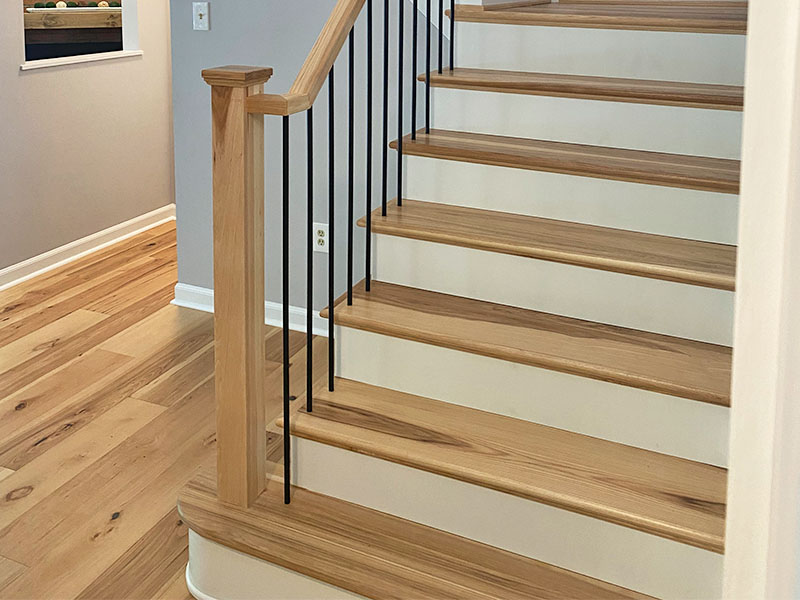
A squeaky staircase can quickly become a daily frustration. Whether you hear a faint creak or a loud squeal when walking upstairs, those unwanted noises can leave you wondering what’s happening beneath your feet.
While squeaky stairs are common, the cause isn’t always obvious. Some noises result from natural wood movement, while others indicate loose connections, worn components, or damaged stair treads. Understanding why stairs squeak, how to fix them, and when stair tread replacement makes sense can help you decide what your staircase needs.
Why Do Stairs Squeak?
Stairs typically squeak when two components rub against each other as you walk. Over time, repeated foot traffic and natural wood movement can loosen connections, creating friction that produces creaking or squeaking sounds.
Your staircase consists of several components that work together:
- Stair treads: The horizontal surfaces you walk on.
- Risers: The vertical sections between steps.
- Stringers: The structural supports beneath or alongside your steps.
When these components shift or separate slightly, they can produce unwanted noise. Wooden staircases are particularly susceptible because wood naturally expands and contracts with changes in humidity.
Occasional creaking doesn’t necessarily indicate a serious problem. However, persistent squeaking accompanied by visible movement, cracking, or instability deserves closer attention.
6 Common Causes of Squeaky Stairs
Identifying what’s causing your stairs to squeak is the first step toward finding an effective solution. Several factors can contribute to staircase noise, from everyday wear to installation problems.
1. Loose Stair Treads
Loose stair treads are among the most common causes of squeaky stairs. Years of regular use can weaken the connections between the treads and surrounding staircase components.
When you step on a loose tread, it may shift slightly against adjoining wood or fasteners, creating friction and noise. You might notice squeaking in one particular spot, especially near the front or center of a step.
2. Gaps Between Stair Treads and Risers
Your stair treads and risers should fit securely together. However, normal wear, wood shrinkage, or aging materials can create small gaps between them.
As you walk upstairs, pressure may cause these separated components to rub against each other. Even a narrow gap can produce noticeable squeaking, particularly near the front edge of a step.
3. Loose Nails or Fasteners
Older staircases often rely on nails or screws to secure their components. Over time, repeated pressure and natural wood movement can loosen these fasteners.
When a fastener no longer holds adjoining pieces tightly together, the resulting movement can create squeaking. Adding more nails isn’t always an effective solution, especially if the original connection needs reinforcement.
4. Changes in Humidity and Temperature
Wood responds to environmental conditions, making seasonal changes another common cause of staircase noise. During humid weather, wooden components may absorb moisture and expand. In drier conditions, they can shrink slightly, potentially creating gaps between adjoining surfaces.
This explains why your stairs might squeak more during certain seasons. The noise may become less noticeable as indoor conditions change, although existing gaps can remain.
5. Aging or Damaged Stair Components
Like other frequently used features in your home, staircases experience wear over time. Older treads may develop cracks, deteriorating edges, or weakened connections. Risers and supporting components can also experience damage that allows unwanted movement.
If your stairs are visibly worn, uneven, or damaged, squeaking may be one symptom of a larger issue. The condition of the affected components helps determine whether repairs or replacement are appropriate.
6. Poor Staircase Installation
Not every squeaky staircase is old. Newer stairs can also develop noises when components aren’t properly fitted or secured during installation.
Insufficient fastening, poorly fitted joints, or inadequate support can allow movement that produces squeaking. If your staircase began making noise shortly after construction or renovation, an installation-related issue may be responsible.
How to Identify Where Your Stairs Are Squeaking
Before attempting to fix squeaky stairs, you’ll need to identify where the noise originates. Start by slowly walking up and down your staircase, paying attention to which steps produce sounds. Apply normal walking pressure to different areas of each tread and listen for changes.
Certain noises and visible conditions can help you narrow down the source:
- Squeaking near the front: May indicate movement between the tread and riser.
- Noise near the back or sides: Could involve supporting connections.
- Visible gaps or cracks: May suggest separation or damaged materials.
- Movement underfoot: Could indicate a loose connection or structural concern.
If possible, have another person walk on the stairs while you listen from a safe, accessible location. An unfinished basement or open area beneath the staircase may provide a clearer view of its construction.
A noisy but stable step presents a different concern than one that noticeably shifts, bends, or feels insecure. If you discover significant movement or damage, arrange a professional inspection before attempting repairs.
How to Fix Squeaky Stairs
Not every squeaky staircase requires extensive work. Once you’ve identified the likely source, the next step is determining which repair method suits your staircase’s construction and condition.
Secure Loose Stair Treads
Loose treads can sometimes be secured using appropriate screws or reinforcement methods. The goal is to restore a firm connection without damaging the surrounding staircase components.
Fasteners must attach to suitable supporting materials, and their placement depends on how the staircase was built. Finished hardwood stairs require additional care because exposed fasteners can affect their appearance.
If you’re unsure how a tread is attached, a qualified professional can help determine the appropriate fastening method.
Repair Gaps Between Stair Components
Small gaps between stair treads and risers may be repairable using properly fitted wood shims, adhesive, or reinforcement methods.
For example, a carefully installed shim can sometimes stabilize a loose connection. Certain staircase designs also allow reinforcement from underneath, where the repair may be less visible.
The repair must address the actual movement rather than simply conceal the gap. Applying caulk or another cosmetic filler won’t necessarily resolve a loose connection.
Control Indoor Humidity
If your stairs squeak primarily during seasonal weather changes, maintaining consistent indoor humidity may help.
Appropriate humidification or dehumidification can reduce excessive expansion and contraction in wooden components. However, humidity adjustments won’t restore damaged materials or tighten loose connections.
Know When Professional Repairs Are Necessary
Some staircase problems are difficult to diagnose without examining the underlying construction. This is especially true when visible movement occurs or previous repairs haven’t resolved the noise.
A qualified staircase professional can assess the affected components and recommend appropriate repairs. If the problem involves deteriorating treads, replacement may also be an option.
When Should You Replace Stair Treads Instead of Repairing Them?
Although many squeaky stairs can be repaired, certain conditions make stair tread replacement worth considering. New treads can address problems associated with deteriorating walking surfaces while improving your staircase’s appearance.
Replacing stair treads can stop squeaking when the noise comes from damaged treads or loose tread connections. However, new treads won’t resolve unrelated problems involving stringers or other structural supports. Those issues must be addressed separately before replacement.
Several factors can help you decide whether repairing or replacing your existing treads makes more sense.
Your Stair Treads Are Cracked or Severely Worn
Minor surface scratches are generally cosmetic, but deep cracks, deteriorating edges, or significant wear may affect a tread’s durability.
When damage extends beyond the finish, repeated repairs may become impractical. Replacing the affected tread can provide a renewed walking surface, provided the supporting structure remains sound.
Multiple Steps Have Recurring Problems
One squeaky step may need a relatively simple repair. However, when several steps repeatedly loosen or produce noise, your staircase’s overall condition deserves closer attention.
Multiple problem areas can indicate aging materials, worn connections, or installation deficiencies. Examining the staircase as a whole can help determine whether individual repairs remain worthwhile or whether more extensive work is necessary.
Your Staircase Looks Outdated
Squeaking isn’t the only reason to consider stair tread replacement. If your staircase has worn finishes, dated materials, or damaged surfaces, replacing the treads can also improve its appearance.
For example, upgrading older carpeted stairs to hardwood treads can create a cleaner, more timeless look. Planning these improvements together also provides an opportunity to address accessible connections during renovation.
Previous Repairs Haven’t Worked
If you’ve already attempted minor repairs but the squeaking keeps returning, the underlying problem may not have been fully resolved.
Rather than continuing to invest in temporary fixes, consider having your staircase evaluated. Depending on its condition, replacing deteriorated treads may be worthwhile, but recurring noises don’t automatically mean new treads are necessary.
Darby Stair Renovations specializes in staircase renovations, including stair tread replacement. If you’re considering replacing worn or outdated treads, we can help you explore renovation options that complement your home’s style and existing staircase.
How Much Does It Cost to Fix Squeaky Stairs?
The cost of fixing squeaky stairs depends on the source of the noise, your staircase’s condition, and the work required. A minor repair involving an accessible, loose connection will generally cost less than replacing several damaged treads.
Several factors may influence the cost:
- Extent of damage: The number and condition of affected steps.
- Staircase size: The materials and labor required.
- Tread materials: Your choice of wood and finish.
- Accessibility: How easily connections can be reached.
- Existing coverings: Whether carpeting or other materials need removal.
If you’re considering stair tread replacement, request an estimate based on your staircase’s actual condition rather than relying on generalized pricing. This helps you compare the cost of localized repairs with a broader renovation, particularly if improving your staircase’s appearance is also a priority.
How to Prevent Your Stairs From Squeaking Again
Although you can’t eliminate every sound associated with natural wood movement, regular maintenance can help reduce unnecessary wear and identify developing problems.
A few practical habits can help you maintain your staircase:
- Manage indoor humidity to reduce excessive wood movement.
- Clean up spills promptly to protect wooden treads.
- Check for cracks or gaps before damage worsens.
- Address new movement rather than ignoring unstable steps.
If you’re planning a staircase renovation, proper installation is equally important. Secure connections, suitable materials, and correctly fitted components can help reduce avoidable noise and support reliable performance over time.
Upgrade Your Squeaky Stairs With Darby Stair Renovations
Squeaky stairs aren’t always a serious problem, but persistent noise can indicate loose connections, aging treads, or other issues that deserve attention. Understanding the cause can help you determine whether a repair or a more substantial staircase upgrade makes sense.
Darby Stair Renovations specializes in staircase renovations and stair tread replacement. If your stairs are showing signs of wear or you’re ready to update their appearance, we can help you explore options that suit your home.
Ready to replace worn stair treads or give your staircase a fresh look? Contact us today to discuss your renovation options and request an estimate.